
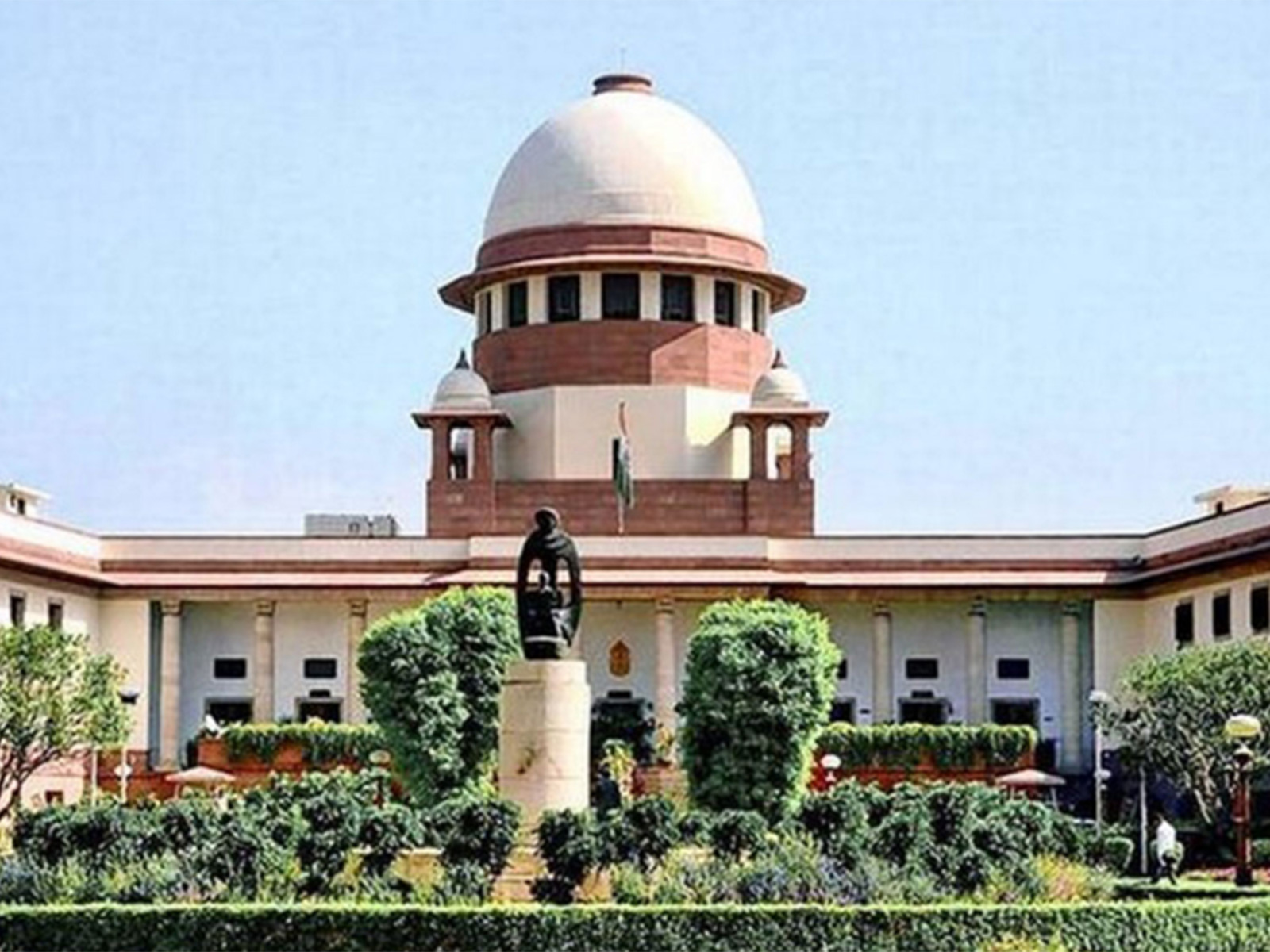
Madhya Pradesh , 14 July : The Supreme Court has issued a notice to the Hindu side on petitions challenging the Madhya Pradesh High Court’s judgment in the Bhojshala dispute.
The Bench, comprising Chief Justice of India Surya Kant, Justice Joymalya Bagchi and Justice V Mohan, declined to stay the High Court’s ruling and ordered authorities to maintain the status quo at the historic Bhojshala complex in Dhar.
The Bench will hear the matter again after three weeks.
The apex court directed the Madhya Pradesh government to make an interim arrangement by providing an alternative space near the Bhojshala complex for Muslims to offer Friday prayers between 1 PM and 3 PM.
Chief Justice Surya Kant said the arrangement should ensure that neither community faces inconvenience while the case is pending.
Arguments Before the Court
Senior advocate Huzaifa Ahmadi, appearing for the Muslim side, sought interim relief, arguing that the High Court’s order had been implemented in haste and disturbed a long-standing arrangement.
Senior advocate Abhishek Manu Singhvi also questioned the decision to restrict the entry of one community. However, the Solicitor General, representing the Centre and the Madhya Pradesh government, opposed the plea for a stay.
The Chief Justice described the dispute as highly sensitive and urged all counsel to exercise restraint in their submissions.
The Madhya Pradesh High Court had recognised Bhojshala as a temple dedicated to Goddess Vagdevi (Saraswati) based on the Archaeological Survey of India (ASI) report, which identified temple-style pillars, carvings and Hindu religious symbols within the complex.
The court also observed that the government could allot alternative land to the mosque side if it submitted an application.
The Hindu community regards Bhojshala as a temple of Goddess Saraswati, while the Muslim side maintains that the 11th-century monument is the Kamal Maula Mosque.
The dispute intensifies when Basant Panchami falls on a Friday, as both Hindu worship and Friday prayers coincide. In previous years, local authorities facilitated both religious observances through coordinated arrangements.
Warning: Trying to access array offset on false in /home/areomziw/nawaiduggar.com/wp-content/themes/goodnews5/framework/functions/momizat_functions.php on line 104
Warning: Trying to access array offset on null in /home/areomziw/nawaiduggar.com/wp-content/themes/goodnews5/framework/functions/posts_share.php on line 66
Warning: Trying to access array offset on null in /home/areomziw/nawaiduggar.com/wp-content/themes/goodnews5/framework/functions/posts_share.php on line 82