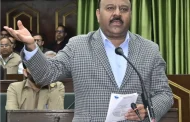


Uttar Pradesh , 1 April : Rajya Sabha MP and former Uttar Pradesh Deputy Chief Minister Dinesh Sharma on Wednesday advocated equal rights for Hindu-run educational institutions in matters of religious education, saying they should receive the same autonomy as minority institutions.
Speaking during Zero Hour in the Rajya Sabha, Sharma said the Constitution guarantees equality to all citizens, but institutions do not treat religious education equally.
Dinesh Sharma pointed out that minority institutions are allowed to impart religious teachings even while receiving government aid, whereas Hindu institutions face restrictions in doing so. He emphasised the need to ensure equal institutional autonomy for all.
Sharma stated that Articles 29 and 30 have led to practical inequalities in the education sector. He noted that Article 30(1) grants minorities the right to establish and administer institutions of their choice, including imparting religious education, while Hindu institutions lack similar rights.
Rajya Sabha MP further highlighted that exemptions granted to minority institutions under the Right to Education Act place additional administrative and financial burdens on Hindu-run institutions.
Historical Context and Legal Attempts
Referring to past developments, he mentioned that organisations such as the Ramakrishna Mission had unsuccessfully sought minority status to avoid government intervention.
Arya Samaj-run DAV institutions and Lingayat-run institutions in Karnataka also made similar attempts.
Sharma also raised concerns over what he described as an imbalance in the teaching of religious texts. He said government-aided minority institutions, including madrasas and missionary schools, can teach religious scriptures such as the Quran and the Bible, while Hindu institutions face challenges when they teach texts such as the Vedas or the Gita.
Rajya Sabha MP clarified that the issue is not about opposing any community but about ensuring equal rights for Hindu educational institutions. He called for amendments to Articles 29 and 30 to extend the same rights to all citizens, advocating a uniform framework for institutional autonomy under the principle of one nation, one law.
17 other MPs associated themselves with his views, and the House welcomed the remarks with applause.
Warning: Trying to access array offset on false in /home/areomziw/nawaiduggar.com/wp-content/themes/goodnews5/framework/functions/momizat_functions.php on line 104
Warning: Trying to access array offset on null in /home/areomziw/nawaiduggar.com/wp-content/themes/goodnews5/framework/functions/posts_share.php on line 66
Warning: Trying to access array offset on null in /home/areomziw/nawaiduggar.com/wp-content/themes/goodnews5/framework/functions/posts_share.php on line 82