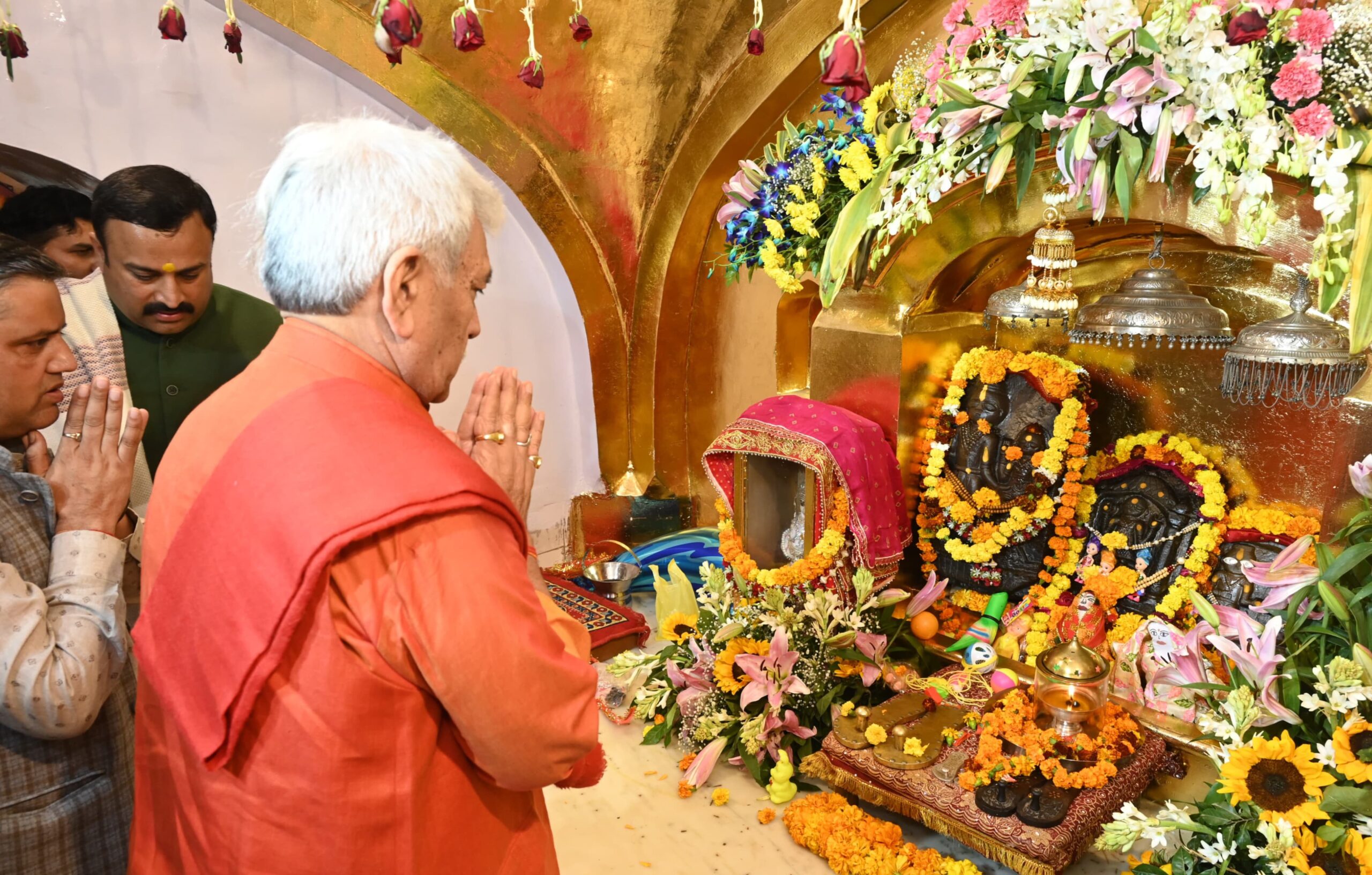
Jammu, Nov 24: The life and supreme sacrifice of the 16th-century farmer-saint Baba Jitto conveyed the message that a man’s greatest strength was truth and self-respect, Jammu and Kashmir Lieutenant Governor Manoj Sinha said while inaugurating the 10-day annual Jhiri Mela on Tuesday.
Speaking at the mela on the outskirts of Jammu city, Sinha called for farmers’ empowerment, preservation of Dogra cultural heritage and collective efforts to build a developed, prosperous and inclusive Jammu and Kashmir.
One of the biggest farmers’ fairs in northern India, Jhiri Mela registers an annual footfall of 10 to 12 lakh devotees, mainly farmers from the Jammu region, Punjab, Himachal Pradesh and Haryana, who arrive to commemorate the sacrifice of Baba Jitto, who laid down his life resisting exploitation of a feudal landlord nearly 500 years ago.
He said visiting the Jhiri Mela every year had become like a sacred pilgrimage for him, offering a unique sense of belonging and spiritual experience.
Describing Baba Jitto’s life as an immortal saga of truth, courage and justice, Sinha said the legendary farmer was an ordinary man with extraordinary ideals and character.
When the zamindar demanded an unjust share from the crop he had cultivated through hard work, Baba Jitto refused to bow before injustice, making it clear that a farmer’s labour, sweat and rights must be respected, Sinha said.
“His struggle was not merely for his crop; it was a struggle for the rights of every hardworking individual and for the dignity and respect to which every farmer is entitled,” he said.
Sinha said the real tribute to the sacrifices of Baba Jitto and Bua Kauri would be to build a society where no farmer was compelled to fight alone for his rights and dignity.
“This cannot be the sole responsibility of the government or any individual official. We need a whole-of-government and whole-of-society approach to establish such a system,” he said.
Emphasising the importance of agriculture in India’s civilisation and cultural heritage, the lieutenant governor said farmers had for centuries fulfilled people’s food requirements and also enriched its traditions.
Referring to initiatives under the Holistic Agriculture Development Programme, Sinha said efforts were underway to transform Jammu and Kashmir’s agriculture, horticulture and dairy sectors.
Expansion of storage facilities, grading and packaging units, along with crop diversification, were among the measures aimed at enhancing farmers’ income, he said.
He said policy changes and new schemes were being implemented to move agriculture beyond traditional cultivation towards an integrated system that would enable farmers to produce better-quality crops at lower costs and secure remunerative prices for their produce.
Sinha stressed the need to equip farmers, particularly small and marginal farmers, with modern technology and scientific knowledge, enabling them to respond to changing market demands.
Agriculture and food sectors offered immense opportunities for employment generation, particularly for youth, he said, urging young people to use their talent, technical knowledge and innovation to make farming more productive and profitable.
Sinha also highlighted the importance of promoting millet cultivation, saying a campaign had been initiated in September to bring more farming families under the initiative.
With farmers facing increasing economic pressures and declining groundwater levels, he stressed the need for better water management and climate-resilient agricultural practices.
Millet crops could play an important role in this direction, he said, adding that sustainable farming practices were essential to address the challenges posed by climate change.