

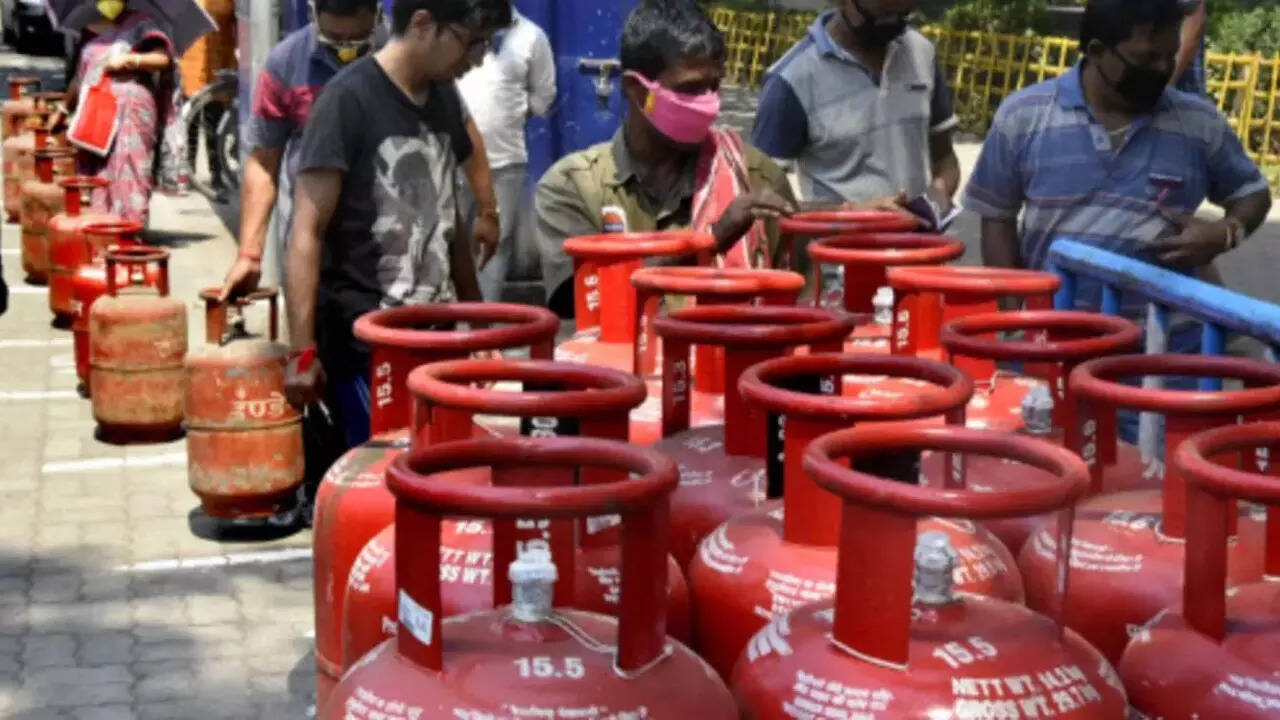
20 June : India reshaped its LPG import strategy during the recent instability in West Asia by sourcing larger quantities from a wider range of countries.
A report by Crisil revealed that the United States accounted for almost one-third of India’s LPG imports in April 2026, a sharp rise from 8 per cent recorded in February.
India strengthened this transition by signing a long-term agreement with the United States in late 2025 to import 2.2 million tonnes of LPG annually.
The agreement is expected to fulfil nearly 10 per cent of the country’s annual LPG import requirements.
Iran also resumed supplying LPG to India and accounted for nearly 6 per cent of total imports in April. Additionally, India sourced LPG cargoes from Argentina, Chile, France, and the Netherlands.
Although the broader supplier base helped India maintain uninterrupted LPG availability, the revised trade routes increased transportation distances and freight expenditures. These logistical challenges added to the overall import burden.
According to Crisil, international LPG prices climbed sharply during the period. The Saudi Aramco Contract Price, which serves as the benchmark for India’s LPG purchases, rose by 46 per cent between February and June due to concerns over supply availability and escalating shipping charges.
Consumption Slows as Prices Rise
Higher costs and supply-related pressures weighed on LPG demand across the country. Monthly consumption declined from 3.2 million tonnes in February to 2.47 million tonnes in April.
After touching an all-time high of 33.2 million tonnes in FY26, LPG demand weakened considerably. Consumption registered a 13 per cent year-on-year decline in March and April, before falling by 20 per cent in May.
Commercial and industrial consumers experienced the greatest impact because they are exposed to market-driven pricing. In contrast, household demand remained comparatively stable as domestic cooking gas prices saw only limited revisions.
While global LPG prices surged, domestic household cylinder prices increased only modestly. The price of a standard 14.2-kg LPG cylinder in Delhi rose by about 10 per cent during the period, whereas rates for 19-kg commercial cylinders jumped by more than 79 per cent.
The decision to limit increases in household LPG prices significantly widened under-recoveries for state-owned oil marketing companies.
Crisil estimated that losses on each domestic cylinder in Delhi reached ₹651 in May, taking the cumulative burden borne by public sector fuel retailers between March and May to nearly ₹22,000 crore.
Warning: Trying to access array offset on false in /home/areomziw/nawaiduggar.com/wp-content/themes/goodnews5/framework/functions/momizat_functions.php on line 104
Warning: Trying to access array offset on null in /home/areomziw/nawaiduggar.com/wp-content/themes/goodnews5/framework/functions/posts_share.php on line 66
Warning: Trying to access array offset on null in /home/areomziw/nawaiduggar.com/wp-content/themes/goodnews5/framework/functions/posts_share.php on line 82