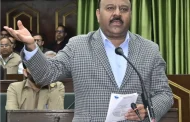


Bihar , 3 , Feb : The Bihar government on Tuesday introduced a historic budget of Rs 3,47,589.76 crore for the financial year 2026–27, the largest allocation in the state’s history. Finance Minister Bijendra Yadav presented the proposal in the Bihar Legislative Assembly, describing it as a framework for accelerated growth, employment creation and enhanced social justice.
The budget represents an increase of roughly Rs 30,695 crore over the previous year, signalling the state’s commitment to expansionary fiscal policies and developmental priorities.
A standout feature of the budget is the substantial rise in capital expenditure, set at Rs 63,455.84 crore or 18.26 per cent of the total outlay. The government will use these funds to build long-term infrastructure projects such as roads, bridges, irrigation networks, power plants, water supply systems, schools, colleges and hospitals.
Education and higher education receive the largest allocation of Rs 68,216.95 crore. While a portion covers staff salaries, the government has emphasised opening new degree colleges, model schools, teacher recruitment, digital education initiatives and expansion of higher education institutions.
Health, Security and Agriculture
The health sector has been allocated Rs 21,270.40 crore to upgrade district hospitals, establish new medical colleges and improve overall healthcare services. The Home Department will receive Rs 20,270.40 crore to strengthen law enforcement, enhance technology and modernise policing infrastructure.
For Bihar’s agriculture sector, the government announced the continuation of Agriculture Roadmap-4 to boost production of maize, pulses, oilseeds, fruits and vegetables. Farmers will also receive an additional Rs 3,000 per year under the Chief Minister Kisan Samman Nidhi scheme. Support for cold storage, food processing and agricultural startups aims to increase rural income and generate employment.
The state aims to create one crore job opportunities by expanding skill development centres and establishing industrial clusters. The new industrial policy targets Rs 50 lakh crore in capital investment, with a focus on MSMEs and startups.
Women’s empowerment remains a priority through continued support for self-help groups, accessible loans and promotion of local industries such as dairy, tailoring and food processing.
Despite the large outlay, Bihar has maintained a fiscal deficit of 2.99 per cent of GSDP, keeping debt within safe limits. Targeted allocations for Scheduled Castes and Scheduled Tribes reinforce the government’s commitment to inclusive growth.
Warning: Trying to access array offset on false in /home/areomziw/nawaiduggar.com/wp-content/themes/goodnews5/framework/functions/momizat_functions.php on line 104
Warning: Trying to access array offset on null in /home/areomziw/nawaiduggar.com/wp-content/themes/goodnews5/framework/functions/posts_share.php on line 66
Warning: Trying to access array offset on null in /home/areomziw/nawaiduggar.com/wp-content/themes/goodnews5/framework/functions/posts_share.php on line 82