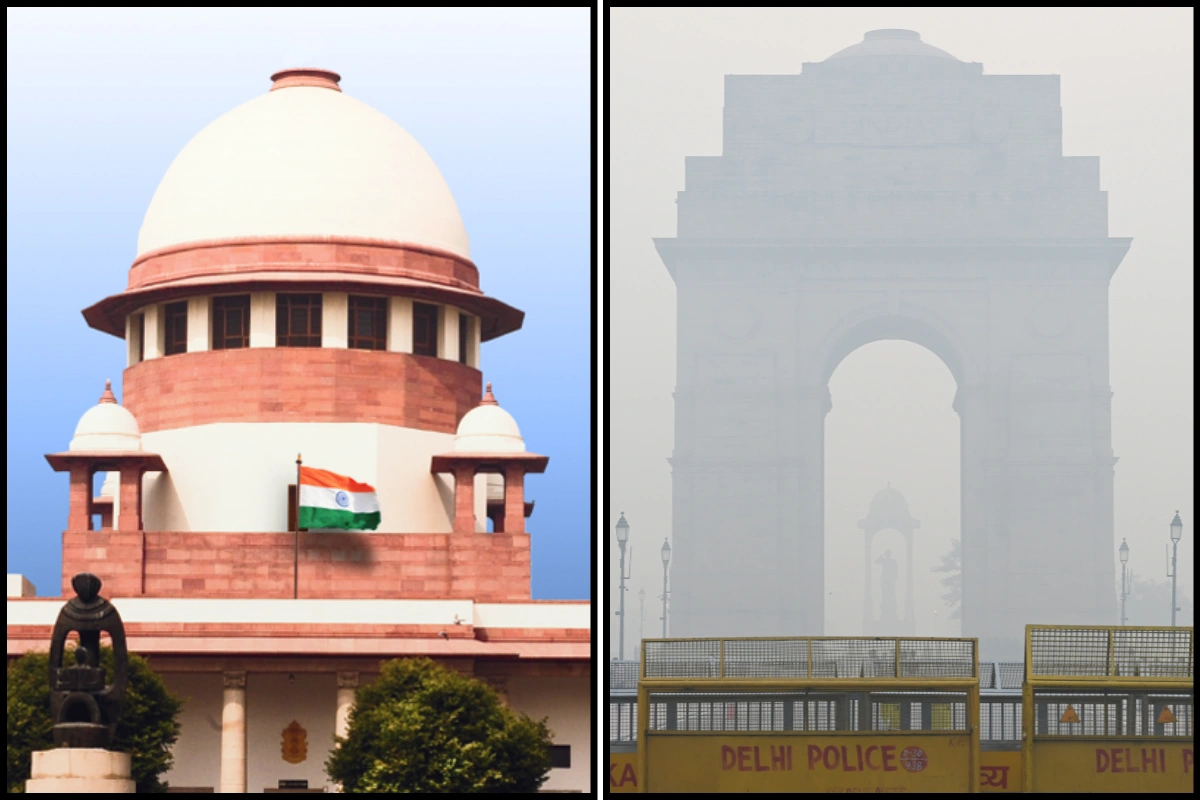
New Delhi , 1 Dec : The Supreme Court on Monday refused to enter a debate on farm fires and stressed that it would not watch passively as Delhi’s air quality deteriorates to dangerous levels, affecting millions.
A bench led by Chief Justice of India Surya Kant, along with Justice Joymalya Bagchi, instructed the Commission for Air Quality Management (CAQM) to submit a report within a week outlining an ‘actionable’ plan to combat the recurring pollution crisis, with particular focus on contributors other than crop residue burning.
Setting the next hearing for 10 December, the bench pressed the CAQM to explain its short-term strategy for improving Delhi’s air and to specify which sources, identified through scientific study, are currently the most harmful.
As the court heard matters linked to the MC Mehta pollution case, the judges cautioned against targeting farmers alone for Delhi’s toxic air and instead sought clarity on how construction activity and other sectors were contributing to rising pollution levels.
“We do not want to comment on stubble burning, as it would be incorrect to burden the people who are hardly represented in the court,” the bench remarked.
‘Why Was the Sky Blue During COVID?’ Judges Ask
Recalling previous years, the judges noted, “Stubble burning was there during the COVID, but why could the people still see a clear blue sky?”
The court warned against politicising crop burning or turning it into a matter of pride or blame. It further added that when farmers burn stubble, it is often related to protecting their livelihoods.
The bench also sought details from the Union Environment Ministry on steps taken so far and asked whether any measurable improvement had resulted from these efforts.
Additional Solicitor General Aishwarya Bhati told the court that Punjab, Haryana, the CPCB and other authorities would file their updates shortly. She acknowledged that the goal of ‘zero burning’ had not yet met, but said that stubble burning remained a seasonal contributor to pollution.