Leh, Sep 17: The recently approved Nautor framework would provide greater clarity to eligible historical landholders, facilitate productive use of agricultural land and enable access to bank loans, a top Union territory official has said following concerns raised by some groups over its impact.
Nautor land refers to barren or wasteland owned by the government and historically allotted to individuals for cultivation or other productive purposes. More than 60,000 acres of land in Ladakh is presently recorded in revenue records as Nautor holdings.
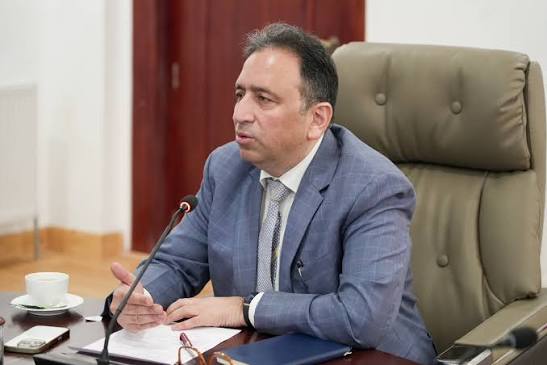
Ladakh Chief Secretary Ashish Kundra said the framework would also help address longstanding historical and revenue-record issues associated with Nautor land, while reiterating that the interests of genuine occupants, along with the broader public interest, would be duly considered while finalising the framework for implementation.
On September 4, Ladakh Lieutenant Governor V K Saxena approved the regularisation rules, paving the way for the grant of proprietary rights over eligible barren land and resolving a long-pending issue concerning thousands of landholders in the Union territory.
However, the Kargil Democratic Alliance (KDA) opposed the framework, claiming that it would effectively amount to purchasing one’s own land at market rates and could create further mistrust amid the ongoing dialogue with the Centre.
Among the key provisions of the Rules, eligible genuine Nautor holders may be granted proprietary rights over up to 10 acres at the notified market rate of the concerned revenue village, while land beyond 10 acres may be allotted on a leasehold basis at a premium of 80 per cent of the notified market rate.
Regularisation will be considered only in cases where occupation existed prior to the cut-off date of October 27, 2020, while abandoned land or land found to have been encroached upon will not be eligible for allotment and will be liable to eviction.
During the extensive consultation, participants raised several issues relating to the historical nature of Nautor land, tenancy and ownership rights, old allotments, agricultural and pastoral land, land in remote and nomadic areas, and cases where historical occupation may not have been adequately reflected in revenue records.
Concerns were also raised regarding land associated with monasteries, mosques, schools and other religious and community institutions, the spokesperson said on Thursday.
Responding to the concerns raised at the meeting, the chief secretary assured the participants that the feedback would be examined and emphasised that the Administration would continue consultations with stakeholders and undertake necessary action before its further implementation, the spokesperson said.
Warning: Trying to access array offset on null in /home/areomziw/nawaiduggar.com/wp-content/themes/goodnews5/framework/functions/posts_share.php on line 66
Warning: Trying to access array offset on null in /home/areomziw/nawaiduggar.com/wp-content/themes/goodnews5/framework/functions/posts_share.php on line 82